
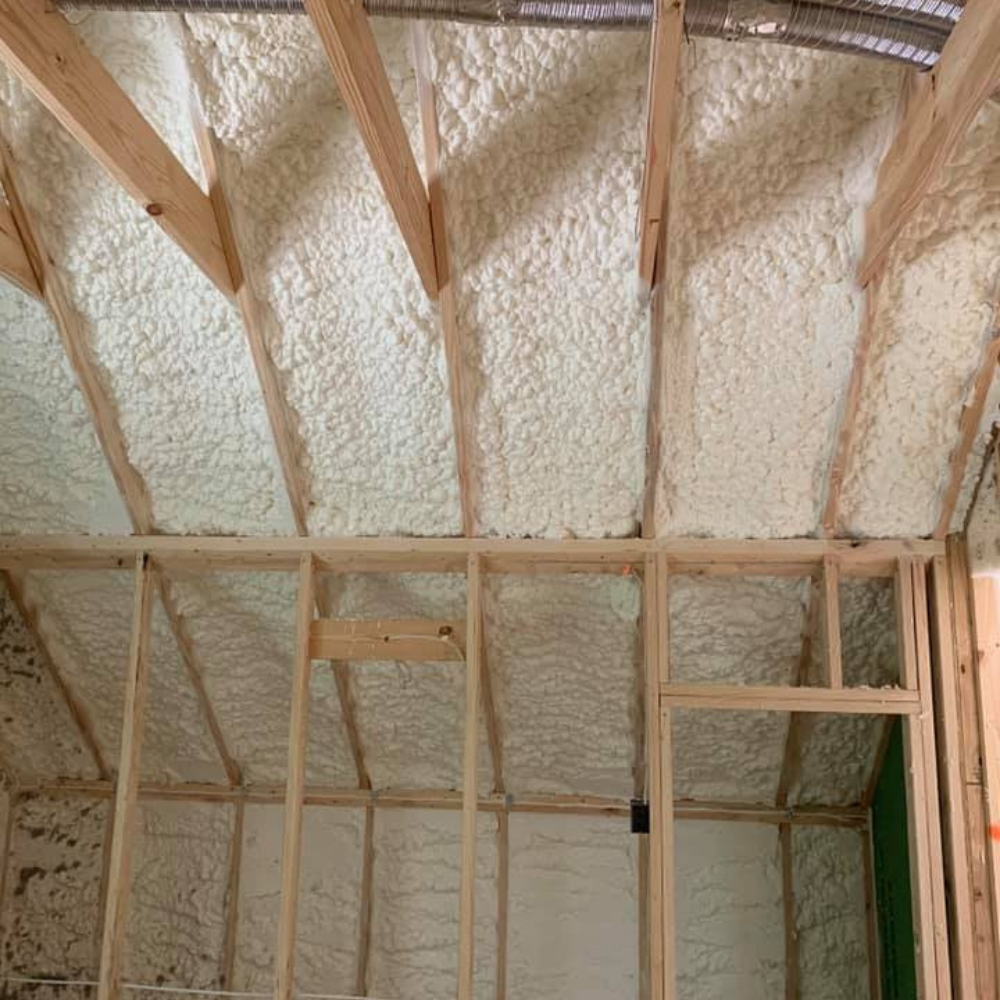
Adequate insulation is an essential part of making your home livable and comfortable. Not only does it make it easier to control indoor air temperature, but it also contributes to soundproofing and can improve your home’s structural integrity. Of the options, spray foam insulation is rapidly becoming the most popular type on the market. It eventually pays for itself by reducing heat transfer significantly. It can sometimes reduce annual energy bills by hundreds of dollars.
This insulation is made up of two chemicals that react when combined. The result is an expanding foam that can easily be applied in hard-to-reach areas. Once it dries, it acts as a protective barrier. Little pockets of air in the foam make it challenging for heat and sound to pass through. Insulation is usually applied in attics and basements. However, spray foam can insulate more than just your walls or roof. For example, floor applications can prevent cold air from moving through gaps in the floorboards. Since foam can be sprayed into cracks, crevices, and narrow spaces, applying it anywhere you want to slow heat flow or increase moisture control is easy. Common examples include securing pipes or ductwork or filling gaps in walls and around doors or windows.
Regarding reducing air leakage, spray polyurethane foam (SPF) beats the competition. However, some spray foams are water resistant, making them especially handy in Virginia’s humid climate. In addition to reducing energy costs, it can sometimes offset other expenses associated with protecting your home from the elements, such as caulking or installing a vapor barrier. Since it can last 80 to 100 years, many homeowners consider spray foam insulation well worth the investment.
There are two types of spray foam insulation: open-cell and closed-cell. As the name suggests, the difference is that the air pockets in open-cell foam are not entirely enclosed. Though both open and closed-cell foams serve as fantastic insulators, the former is a softer and more flexible substance. As a result, it is more vulnerable to Virginia’s humidity. If you want to apply insulation in a dry environment, you can save money by going with the open-cell foam, as it expands and requires less material to fill the same amount of space. It also has better fire-resistance properties.
However, if you aim to maximize your home’s insulation potential, go with closed-cell foam. Closed-cell foams can have an R-value as high as 6 or 7, which is an impressive improvement compared to fiberglass batt insulations with an R-value of 3.1 to 3.4 per inch of thickness (). Closed-cell is typically more expensive than open-cell since greater density requires more volume. However, unlike open-cell foam, it is also moisture-resistant and can be used in areas vulnerable to water.
DIY installation is not recommended unless you already have the correct safety equipment and experience working with the materials. To ensure proper installation that follows the local building codes, hire a professional like Energy Management Insulators.
Contact us today to learn more about our spray foam services.